



brainspotting therapy
What is Brainspotting?
Brainspotting is a cutting-edge psychology and coaching modality that bypasses conscious thought, allowing us to directly access the deep brain, activating the body’s innate ability to heal itself from trauma by helping you to reprocess negative events and retrain emotional reactions.
Trauma research shows that trauma not just a mental process; it is “stored” in the body and the nervous system and accessed through what we call the deep brain — the part of the brain that operates below conscious awareness.
Traditional talk therapy uses the conscious brain (the neocortex, the seat of our executive functioning) to analyze and change our thoughts and behaviors. It’s a valuable way of working — and sometimes, when what’s running us is not in our conscious awareness, it can be insufficient as an agent of change.
Brainspotting is primarily used in trauma therapy and for the treatment of PTSD. It has also been shown to assist in injury recovery and help treat physical illness, inattention, stress, and low motivation. Other, seemingly unrelated psychological issues like explosive anger, procrastination, and difficulty concentrating, among others — can be caused by trauma. Therefore, brainspotting might be a particularly effective form of therapy for those individuals who wish to address one or more of these concerns.
How Brainspotting Works
Where you look affects how you feel
What happens in a Brainspotting session?
A Sound, Research-Based Therapy
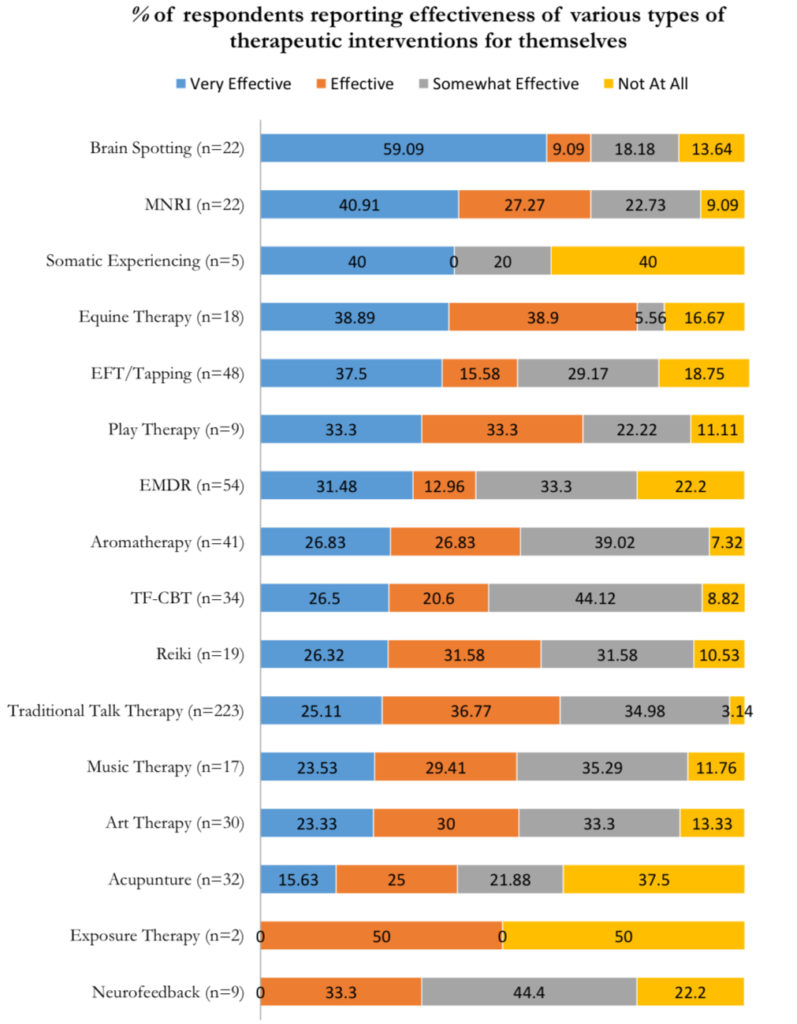
In 2012 the community of Newtown, Connecticut experienced a horrific tragedy when a gunman opened fire at Sandy Hook Elementary School, killing twenty children and six adults. Therapists with all kinds of training traveled there to provide support for the survivors. A few years later those survivors were polled about which therapeutic interventions felt most effective for them; Brainspotting was found to be the most effective mode of therapy. (See graph.)
Research shows that Brainspotting works directly with the deep (subcortical) brain in a variety of ways to improve quality of life. It has been effective in giving trauma survivors more peace and empowerment. People have been able to release the grip of depression, anxiety, or grief. Brainspotting is also used to help athletes, writers, musicians, and other high performers to dissolve performance blocks and achieve their goals with more ease.
Brainspotting understands that the nervous system knows how to heal itself, and will do so if given the right conditions. Because we privilege this innate healing wisdom, Brainspotting can be safely and respectfully utilized with all populations and cultures.
Working with Me
My approach with clients is warm, grounded, and collaborative. In my two decades of work and thousands of client sessions, I’ve learned that most of the time my client knows what’s best or next for them; my job is to hold space, notice patterns, and help them access their own deeper wisdom. Over time they learn to trust themselves more, and to live more authentically.
I bring some unique training and experience to our sessions. I’ve spent 20+ years specializing in cutting-edge therapies for PTSD and everyday trauma, and I’ve sought out this work because I have experienced first-hand how powerful it is — I worked with a Brainspotting therapist myself for a few years, and the healing was profound. That experience led me to train and become certified myself, so I could give others the healing and relief I’ve received. You can read more about my journey on my About page.
But all that training and experience doesn’t necessarily make me the right therapist for you. That’s why I offer a 15-minute consultation free of charge.

Schedule Your Free Consultation
During our consultation, we can talk about what you hope to address in therapy, I can answer any questions you have, and we’ll discuss whether therapy may be a good fit for your goals at this time.
Research shows that the thing that makes therapy most successful is the relationship between therapist and client. So as we talk, you’ll want to check in with yourself about whether or not this relationship feels like it’ll be therapeutic.
How will you know? You might ask yourself some questions, like:
- Do I feel like she really gets me?
- Do I feel safe to open up with her?
- Do I feel like she can actually help me?
If you do, we can talk about scheduling your first full appointment.
Things are about to get better.
Schedule your free consultation today.
